

From Invisible to Authority: The Systematic Content Approach B2B Leaders Use to Build Thought Leadership
Two founders share the same room, yet only one owns the market's attention - the difference isn't talent, but the machine running behind the scenes. While most experts wait for inspiration to strike, authority is built through a deliberate architecture that converts expertise into a predictable inbound engine.

Mirhayot Yunusov
Co-Founder at Eloqwnt | LoloPepe

Picture two founders sitting in the same Zoom-room. Both have spent a decade in the trenches. But while one is struggling to get a reply to a cold email, the other is turning down podcast invites because their calendar is booked solid. The difference?
It’s not that one is 'smarter' - it’s that one has a machine running while the other is just waiting for lightning to strike.
This article is about the system. What it contains, how it works, and the 90-day timeline that converts an invisible expert into a recognized authority in their B2B category. In the world of B2B, attention is the new currency - and most leaders are accidentally leaving theirs on the table.
THE SYSTEM IN ONE PARAGRAPH
B2B thought leadership is built through a system, not inspiration. The architecture has three components: content pillars (3 - 5 topic territories tied to your ICP’s active problems), a batch production model (one monthly session produces all content for the month), and a 90-day commitment to consistent posting (3 - 4 times per week minimum). Authority signals - inbound DMs, shorter sales cycles, speaking invitations - are measurable outcomes of the system, not byproducts of talent.
What Thought Leadership Actually Is (and Isn’t)
Thought leadership is a market position, not a content format. It is the state in which your target audience thinks of you first - and thinks of you as credible - when a specific problem or topic arises. It is earned through consistent, specific, useful contribution to the conversation your ICP is already having.
What thought leadership is not:
- Posting motivational content about entrepreneurship or resilience - this builds a personal brand, not a B2B authority position
- Publishing content about your product or company - this is marketing, not thought leadership
- Occasional long-form articles when you have something important to say - this is expertise sharing, not authority building
The distinction matters operationally. Thought leadership in B2B is not about being interesting. It is about being consistently, specifically useful to a defined audience on a defined set of problems. The founder who posts three times a week about the specific challenges facing CMOs at Series A SaaS companies - with data, with frameworks, with genuine insight - builds authority in that category. The founder who posts about their journey and lessons learned builds a following. Those are different outcomes.
The Three Reasons B2B Executives Stay Invisible
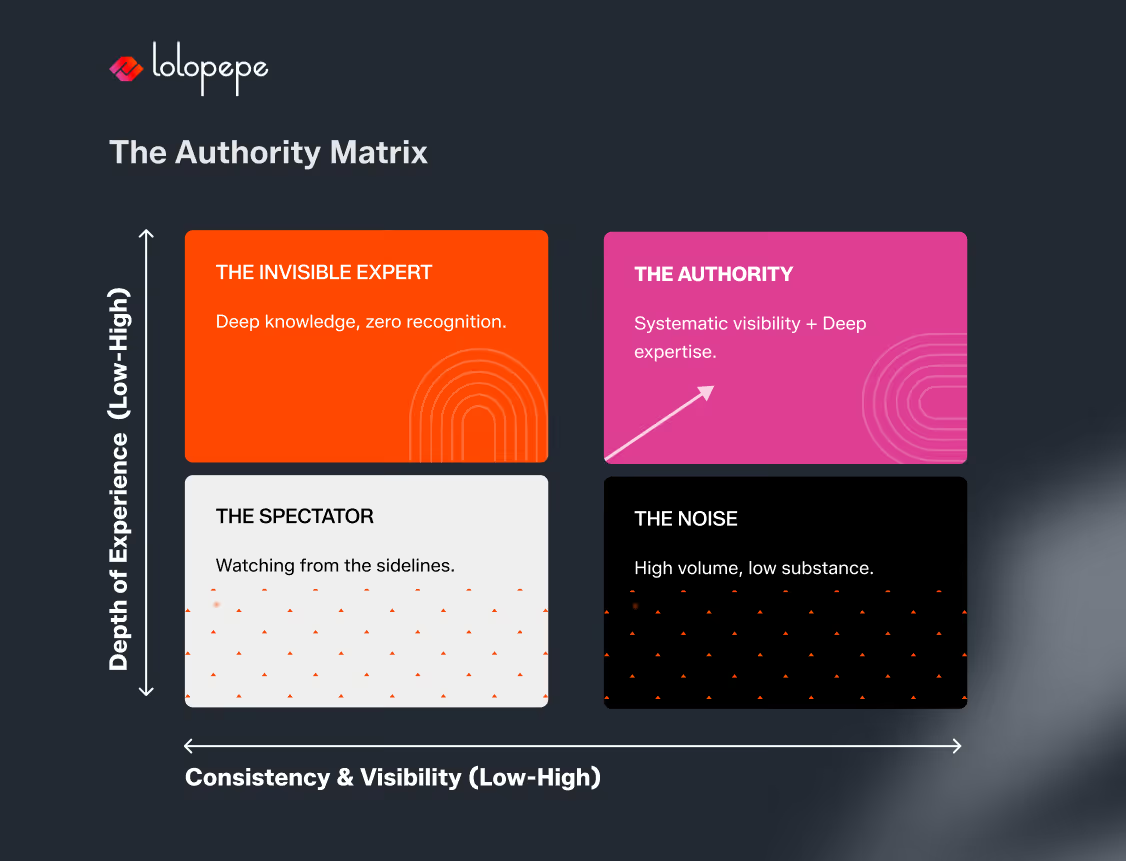
Reason 1: No content pillars. Without defined topic territories, every post requires deciding what to write about. That decision, made under time pressure, repeatedly, defaults to the safest, most generic option: industry news commentary, motivational observations, company updates. Safe content is invisible content. Pillars eliminate the decision problem and force specificity. Being an invisible expert is like giving a masterclass in an empty soundproof room. Your insights are brilliant, but the only person hearing them is you.
Reason 2: Reactive production. Writing content in real time, as inspiration strikes, produces inconsistency. One week: three posts. Next week: zero. The following week: one. Inconsistency is the enemy of authority building on LinkedIn because the algorithm rewards consistent signal and the audience builds familiarity through repetition. A batch production model - one dedicated session per month produces all content for the month - converts inspiration-dependent production into a system. Batching your content is like meal prepping for the week. You spend Sunday afternoon in the kitchen so you don't end up eating junk food (or nothing at all) when Wednesday gets chaotic.
Reason 3: Wrong success metrics. Measuring thought leadership success by likes and impressions produces discouragement. Those metrics respond to entertainment and emotion, not to B2B authority content. The metrics that indicate genuine authority - inbound DM rate, profile visit-to-follow rate, mentions in sales conversations - move on a 60 – 90 -day timeline. Executives who measure likes give up before the authority metrics start moving.
The System Architecture: Three Components
The thought leadership system has three components. All three are required. An executive with strong content pillars but no batch production model will produce inconsistent content. An executive with a batch production model but no defined pillars will produce generic content consistently. An executive with both but no 90-day commitment will not reach the compounding threshold where authority signals emerge.
1: Content Pillars
Content pillars are the 3 - 5 topic territories your thought leadership operates within. They are not topics you find interesting, they are the intersection of your genuine expertise and your ICP’s most active problems.
The pillar design test: for each proposed pillar, ask two questions. First: am I genuinely more expert on this topic than most people in my network? Second: is this topic an active priority or pain point for the specific decision-maker I am trying to reach? If both answers are yes, it is a pillar. If either answer is no, it is not.
Example pillar framework for a B2B marketing agency founder targeting CMOs at $5M–50M ARR companies:
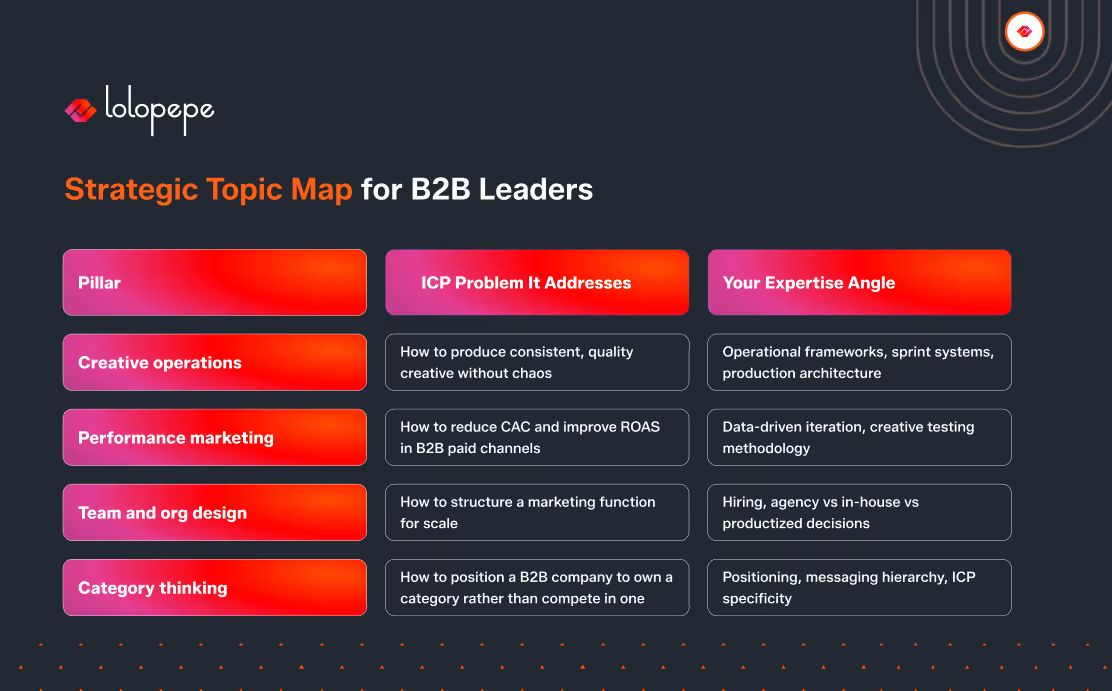
Each pillar should have enough depth to sustain 3 - 4 posts per month indefinitely. A pillar that runs out of content in 6 weeks was a topic, not a pillar.
2: The Batch Production Model
The batch production model converts thought leadership from an inspiration-dependent activity into a systematic one. One dedicated session per month, typically 3 - 4 hours, produces all content for the following month.
The session structure:
- Performance review (30 minutes). Review last month’s content metrics: which posts generated the most profile visits, inbound DMs, or shares? Which pillars performed best? Which formats (text post, carousel, long-form) produced the most authority signal? Use this data to inform this month’s production priority.
- Content planning (30 minutes). Map the month’s content slate: which pillars, which angles, which formats, which weeks. Aim for 12 - 16 posts per month (3 - 4 per week). Balance pillar coverage: no pillar should dominate more than 40% of the month’s posts.
- Writing session (90 - 120 minutes). Write all posts in one concentrated session. Starting from the content plan, not from a blank screen. The cognitive overhead of deciding what to write is already eliminated - this session is pure production.
- Design and formatting (30 - 45 minutes). Carousels and visual posts designed in the same session using approved templates.
- Scheduling (15 minutes). All content scheduled into a scheduling tool (Buffer, Taplio, or LinkedIn native scheduler). The month is done.
Total investment: 3.5 - 4.5 hours per month for a full month of consistent, high-quality thought leadership content. This is the production architecture that makes “no time” an invalid objection.
We’ve all been there: staring at a blinking cursor at 9:00 PM, trying to 'be authoritative' while your brain is fried from back-to-back meetings. That reactive scrambling doesn't just waste an hour - it drains your creative battery for the whole week.
3: The 90-Day Commitment
Think of the first 90 days as dating the algorithm. You can't expect a marriage proposal after the first coffee. You have to show up, be consistent, and prove you're not going to disappear when things get quiet. The timeline is not arbitrary - it reflects how the LinkedIn algorithm, audience familiarity, and authority signals actually develop.
Days 1 – 30
Foundation: The algorithm is building a content signal for your profile. Engagement metrics are inconsistent. Do not measure authority signals yet. Focus entirely on execution consistency: posting 3 - 4 times per week, every week, without deviation.
Days 31 – 60
Momentum: The algorithm has a reliable signal and is beginning to distribute content to new audiences. Profile visits increase. Some posts begin reaching outside your existing network. First authority signals may appear: an inbound DM from someone who found you through content, a connection request from a target ICP profile. These are early indicators, not validation.
Days 61 – 90
Authority signals: Consistent content has now compounded across 90+ posts. Your name is appearing in the feeds of your target ICP with enough frequency that recognition is forming. Inbound DM rate should be measurable: 5 - 12 qualified conversations per month for a well-executed system. Sales conversations begin referencing your content. This is the validation point.
The executives who conclude “LinkedIn doesn’t work for me” are almost always measuring at Day 30 or Day 45 - before the compounding effect has had time to manifest. The 90-day commitment is not optional. It is the minimum time window for the system to produce evidence.

Measuring Authority: The Metrics That Actually Matter
While vanity metrics offer a quick ego boost, true authority is measured by the tangible shifts in how the market interacts with your expertise.
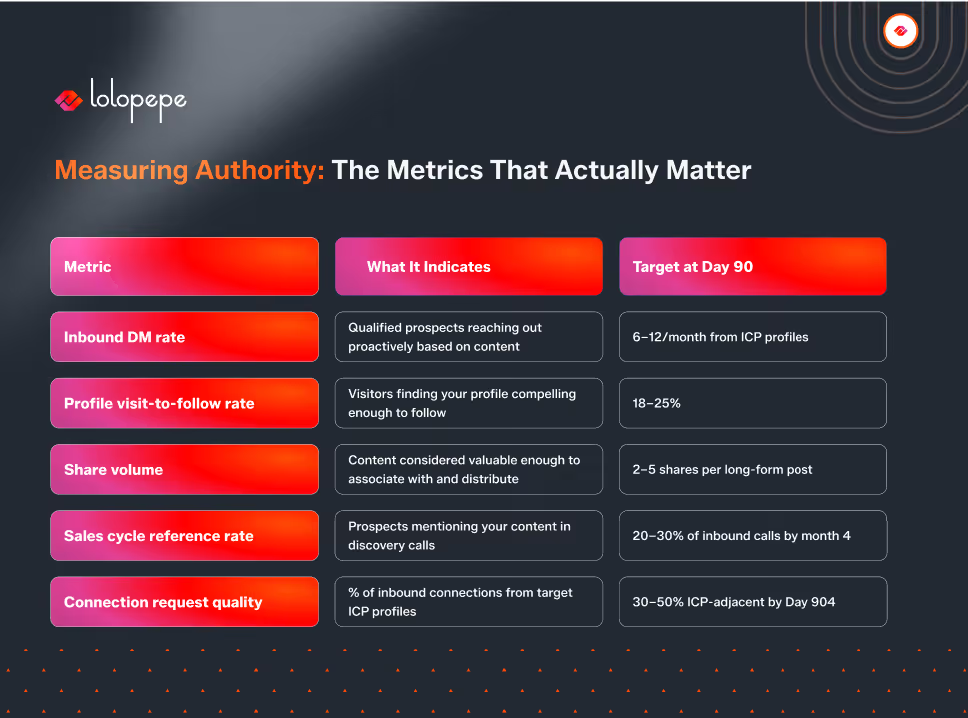
None of these metrics appear at Day 30. All of them are measurable at Day 90 for a well-executed system. The lag between consistent posting and authority signal emergence is the valley of discouragement where most executives abandon the system.
The ones who cross it find the other side is a meaningfully different business development reality. Ask yourself: would you rather have 1,000 likes from bots, or one DM from a CEO saying, 'I’ve been following your posts, and we need to talk'?
Frequently Asked Questions
Q: Do I need to post original thoughts or can I comment on industry news?
A: Commentary builds a following, but original frameworks build authority. If anyone in your feed could have written that post, it’s just noise. True thought leadership requires your unique perspective - it’s what makes your ICP think of you when a specific problem keeps them up at night. Don't be an aggregator- be the person who sets the agenda.
Q: What if I don’t have time for a 3.5-hour monthly production session?
A: That’s just 45 minutes a week. If you can't find 45 minutes for a business development engine that fills your pipeline, the issue isn't time - it's priority. You can split it into two blocks, but stay away from "reactive" posting between meetings. Great content needs a concentrated brain, not 10-minute scraps of your day.
Q: Should I post under my personal profile or the company page?
A: Personal profile, every single time. LinkedIn is a social network, not a "brand" network. Personal profiles get 5 - 10x more organic reach than company pages. People trust people, not logos. Use the company page for social proof and updates, but keep the thought leadership attached to the human - the founder or the executive.
Q: Can this system work if I’m not a natural writer?
A: Yes - with one modification. If writing is a genuine barrier, a ghostwriter working from your ideas, frameworks, and voice can produce the content while you maintain the strategic input (pillar design, angle selection, performance review). The thought leadership is still yours - the ideas, the expertise, the positioning. The production is delegated. Many of the most recognized B2B thought leaders use this model. What cannot be delegated is the strategic layer: the pillars, the ICP definition, and the monthly performance review. Those require your judgment.
The Bottom Line
Authority isn’t a trophy awarded to the most talented person in the room. It’s a market position earned by the most consistently visible one. To win, your content must be specific enough to solve a problem, consistent enough to spark recognition, and strategic enough to hit your ICP’s top priorities. The executives who seem to produce "effortless" authority aren’t more inspired than you - they are simply more systematic.
In the world of B2B, this isn't just marketing, it's the highest-ROI activity you can own. Stop waiting for the perfect moment to speak;, build the system that makes the market listen.
Book a Brand Content Audit (Trial) for $750 - a 60-minute session to define your content pillars and build your first month’s content slate.
Mirhayot Yunusov
Co-Founder at Eloqwnt | LoloPepe
Mirhayot builds design-led ventures that make impact. He specializes in turning subjective intuition into scalable Brand Operating Systems that empower Series A+ companies to ship daily.
Through his articles, Mirhayot shares the design thinking, strategic frameworks, and creative decisions behind building brands that look and feel like leaders. Whether it's brand systems, web design, or motion his insights are built from real work with real companies.
Subscribe to our newsletter.
Get valuable strategy, culture, and brand insights straight to your inbox.