
B2B Ad Creative Formats: The Complete Platform Guide for Meta, LinkedIn, and Google
This guide replaces basic resizing with a strategic 'Creative Tree,' ensuring your message speaks the native language of Meta, LinkedIn, and Google. Master technical safe zones to transform constraints into a competitive advantage

Mirhayot Yunusov
Co-Founder at Eloqwnt | LoloPepe

Most B2B creative teams treat platform specs as a post-production chore. The brief is written, the assets are polished, and the campaign is live - until someone realizes the LinkedIn headline is truncated, or the Meta video is a 16:9 ghost in a 9:16 world.
Format decisions belong at the start of the brief, not the end of production. In the world of B2B, a format isn’t just a technical requirement; it’s the lens through which a high-value lead judges your brand's professionalism. If you resize into a format rather than designing for it, you’re already behind the curve.
WHAT IS AN AD CREATIVE FORMAT?
A B2B ad creative format is a platform-specific combination of dimensions, file type, length, and text limits that governs how an ad appears in a given placement. Each format serves a specific objective - awareness, consideration, or conversion - and requires purpose-built creative to perform at full potential.
Meta Ads: Format Guide by Placement
Meta's placement system serves ads across Feed, Stories, Reels, Marketplace, and the Audience Network. Each placement has different aspect ratios, user behavior, and performance profiles.
Feed — Static Image
- Recommended: 1080 × 1080px (1:1) or 1080 × 1350px (4:5)
- File type: JPG or PNG | Max file size: 30MB
- Text coverage: Keep below 20% to avoid reach penalties
- Performance note: The 4:5 portrait isn't just a trend - it literally occupies 33% more screen real estate on a mobile device than a square. In a crowded feed, that’s the difference between being a scroll-stop or a blur. Use it as your default. It’s the same CPM for a much louder voice..
Feed — Carousel
- Each card: 1080 × 1080px (1:1) | 2–10 cards per ad
- Headline per card: 40 characters | Description: 20 characters
- Performance note: Each card must deliver a standalone insight. In B2B, carousels work well for before/after case studies, framework breakdowns, and multi-benefit offers. Don't assume swipe-through - card 1 must stop the scroll.
Feed — Video
- Aspect ratios: 1:1, 4:5 (recommended), or 16:9
- Recommended resolution: 1080 × 1350px | Max file size: 4GB | Format: MP4 or MOV
- Optimal length for B2B direct response: 15–45 seconds
- Performance note: Add captions - 85% of Meta videos are watched without sound. The first 3 seconds determine skip rate. For B2B, call out the role or pain directly in the opening frame: 'If you're running Meta Ads for a B2B company...'
Stories & Reels
- Aspect ratio: 9:16 (vertical only) | Resolution: 1080 × 1920px
- Safe zone: Center 1080 × 1420px - top and bottom 250px are covered by UI
- Stories: Images display 5 seconds; video up to 60 seconds
- Reels: 3–90 seconds | MP4 or MOV
- Performance note: Stories perform best in retargeting. Use a 3-card story sequence: problem → proof → CTA. Reels offer lower CPMs than feed in B2B - use for TOFU awareness where reach and view rate are the primary metrics.
LinkedIn Ads: Format Guide by Type
LinkedIn is where your 'Type A' buyers live. They value precision and professional rigor. On this platform, a low-res graphic or a poorly cropped video isn't just a technical fail - it’s a brand failure. For B2B, data-forward visuals (clean charts, stat callouts, and frameworks) consistently out-muscle abstract stock imagery. Give them something worth looking at.
Single Image Ad
- Recommended: 1200 × 627px (landscape) or 1200 × 1200px (square)
- File type: JPG or PNG | Max file size: 5MB
- Headline: 150 characters max (70 recommended before feed truncation)
- Introductory text: 600 characters max (150 recommended before truncation)
- Performance note: Square (1:1) gets more feed real estate on mobile. For B2B, data-forward visuals — charts, stat callouts, framework graphics — outperform abstract brand imagery.
Carousel Ad
- Card size: 1080 × 1080px (1:1) | 2–10 cards
- Headline per card: 45 characters | Cards can link to different URLs
- Performance note: LinkedIn carousels are among the highest-performing MOFU formats for B2B. Use them for step-by-step frameworks, case study summaries, and educational content. Gate the final card with a CTA.
Video Ad
- Recommended: 1920 × 1080px (16:9) or 1080 × 1080px (1:1)
- Max file size: 200MB | Format: MP4 | Length: 3 seconds to 30 minutes
- Optimal for direct response: 15–30 seconds
- Performance note: LinkedIn video CPMs are higher than Meta — but audience quality justifies the premium for $3,000+ monthly offers. Always add captions; LinkedIn video is predominantly watched muted in feed.
Document Ad
- Upload PDF or presentation directly as sponsored content
- First page becomes the preview image
- Performance note: High engagement when content delivers genuine value — frameworks, reports, templates. Use for mid-funnel lead magnet distribution. Native reading experience keeps users on LinkedIn, which the algorithm rewards.
Conversation Ad
- Delivered directly to LinkedIn inbox
- Subject line: 60 characters | Body: 1,500 characters | Up to 5 CTA options
- Performance note: High open rates but requires personalization to avoid feeling automated. Best for warm audiences — retargeting site visitors or engaged followers. Do not use for cold prospecting at scale.
Google Ads: Format Guide by Type
Google covers search intent (RSA) and display reach (GDN, YouTube). For B2B, search captures active demand - the highest-intent traffic available. Display and YouTube support awareness and retargeting at scale.
Responsive Search Ads (RSA)
- Headlines: Up to 15, each 30 characters max - Google shows 3 simultaneously
- Descriptions: Up to 4, each 90 characters - Google shows 2 simultaneously
- Performance note: Test different intent levels in your headlines:
Pain-point: 'Creatives burning out in Meta?'
Solution: 'Productized Creative System for B2B'
Trust/Offer: '$750 Trial Sprint - 7 days'
Pin the brand name, but let Google’s machine learning do the heavy lifting for the rest.
Display Ads - Top Performing Sizes for B2B
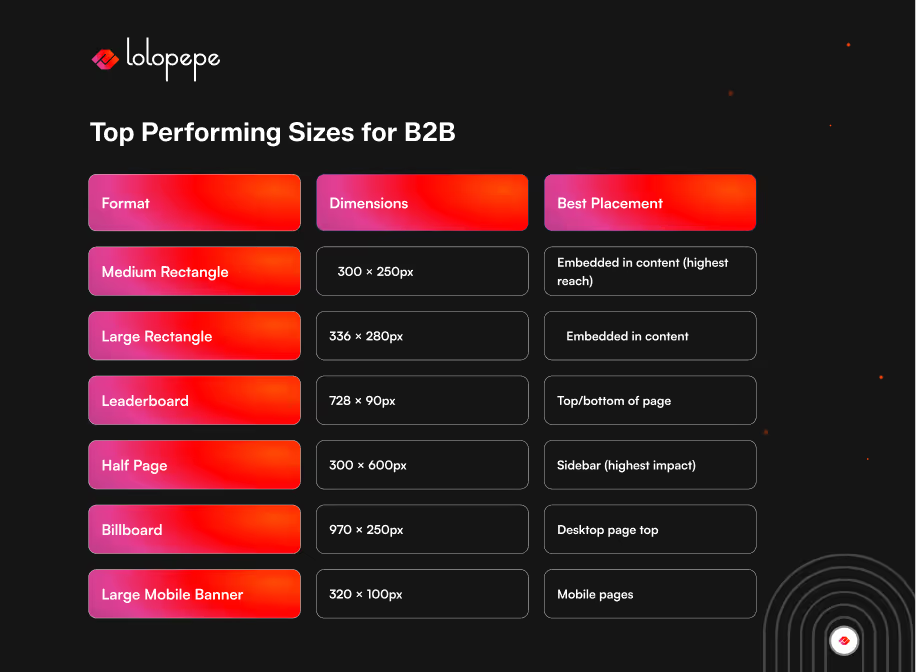
File specs: JPG, PNG, or GIF | Max 150KB (static) | Animation: max 30 seconds, 3 loops
YouTube -Skippable In-Stream
- Minimum 12 seconds | Viewers can skip after 5 seconds
- Billing: Charged at 30-second view or interaction
- Performance note: You have 5 seconds before the skip button. Lead with the sharpest frame - a counterintuitive statement, a specific result, or a direct audience call-out. The first 5 seconds are your entire TOFU ad for most viewers.
YouTube - Bumper Ads
- Maximum 6 seconds | Non-skippable
- Performance note: Use as frequency builders alongside longer campaigns. In B2B, a bumper with brand name + one-line value prop reinforces recall from the main campaign. Don't try to tell the full story — just make the brand land.
Format Performance by Objective - Summary
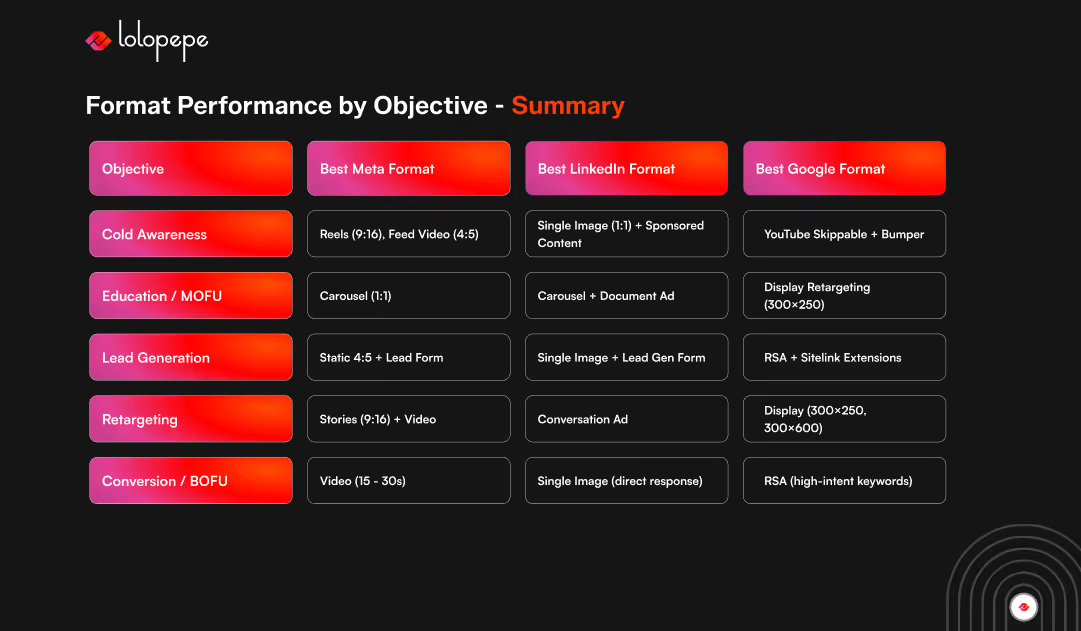
The Creative Tree: One Brief, Multiple Formats
Think of the Creative Tree not as a resizing task, but as a linguistic translation. You have one core message, but Meta speaks in 'Quick Visual Hits', LinkedIn speaks in 'Professional Authority', and Google speaks in 'Intent'. When you build your Tree, you aren't just changing dimensions; you are ensuring your strategy speaks the native language of the platform.
Stop starting from scratch. The Creative Tree approach is how you achieve creative velocity without quality drift. You start with one high-fidelity strategic direction - say, a 45-second case study - and branch it into 10+ platform-native assets. One brief, one design session, a dozen ways to win. This is the difference between an agency that 'makes ads' and a system that builds a brand library.
CREATIVE TREE EXAMPLE
Start with: A 45-second case study video (1080 × 1350px, MP4) Branch into: • 15s hook cut → Meta Reels (9:16) and LinkedIn Video • Static quote card (1080 × 1350px) → Meta Feed • 3-card carousel from video chapters → LinkedIn Carousel • Key stat graphic → LinkedIn Single Image • Document asset → LinkedIn Document Ad • Display banners (300×250, 728×90, 300×600) → Google Display • 6-second brand close → YouTube Bumper Result: 1 brief, 1 shoot or design session, 10–12 deployable assets.
This is the principle behind batch production. Format planning before design makes this possible. Format planning after design makes it expensive.
Frequently Asked Questions
Which Meta format has the best CPM for B2B?
Reels currently offer the lowest CPMs on Meta for B2B advertisers - the inventory is less saturated than Feed. Use Reels for cold TOFU awareness where reach is the primary metric. For direct response and conversion campaigns, 4:5 Feed placement consistently delivers stronger CPL in B2B.
Does LinkedIn support vertical video ads?
Yes - LinkedIn supports vertical (4:5 and 9:16) video in feed placements, though 16:9 and 1:1 remain the most commonly used formats. Vertical video on LinkedIn is currently underutilized, which means lower competition and potentially lower CPMs for early movers.
How many RSA headlines should be pinned vs. unpinned?
Pin 2–3 critical headlines (brand name, primary offer, core differentiator) to ensure they always appear. Leave the remaining 12+ slots unpinned for Google's machine learning to test and optimize. Pinning all headlines removes the algorithmic optimization that makes RSA perform.
What is the 'safe zone' in Stories and Reels, and why does it matter?
The safe zone is the central area of a vertical (9:16) creative where your primary content - headline, logo, CTA - is visible without being obscured by platform UI elements. On Meta Stories and Reels, UI elements cover approximately 250px at the top and bottom of the 1920px frame. Keep all critical content within the center 1080 × 1420px area.
The Bottom Line
Format mastery isn’t a technical chore - it’s a growth strategist’s competitive edge. Teams that plan for multi-format production scale faster because they aren't wasting time on re-briefing and rejected uploads.
Plan the format before you open the brief. Build the Tree before you design the creative.
Download the B2B Creative Specs Sheet
All platform dimensions, file limits, and text specs in one printable reference card.
Or book a 7-Day Creative Sprint for $750 - and see the format-first production system in action.
Mirhayot Yunusov
Co-Founder at Eloqwnt | LoloPepe
Mirhayot builds design infrastructure for founders who have no time for fluff. He specializes in turning subjective intuition into scalable Brand Operating Systems that empower Series B+ companies to ship daily.
Through his articles, Mirhayot shares the design thinking, strategic frameworks, and creative decisions behind building brands that look and feel like leaders. Whether it's brand systems, web design, or motion his insights are built from real work with real companies.
Subscribe to our newsletter.
Get valuable strategy, culture, and brand insights straight to your inbox.